

Gulf & Australia
Australia Builds the Engine. The Gulf Can Build the Road.
Why the Gulf is now the most rational market in which to commercialise Australian technology
Australian technology is often described as having a funding problem. More often, it has a geography problem. The Gulf now offers capital with intent, but it rewards companies that arrive with a strategy before they arrive with a licence.
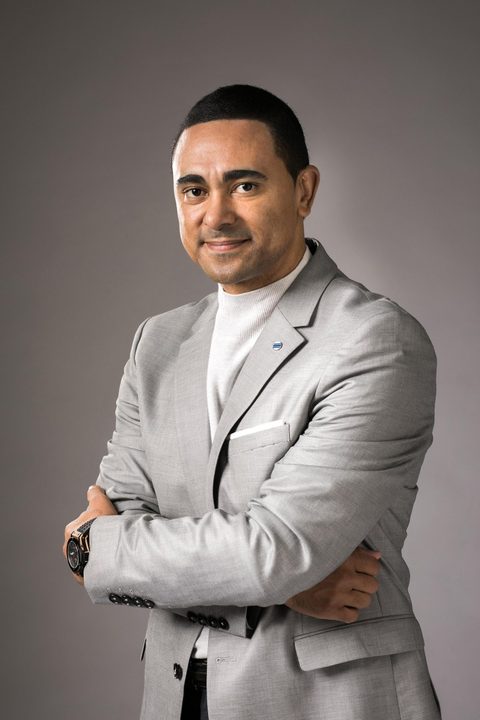
Ryan Babbage
Founder & CEO, OceanMerge® and OceanBlocks
9 min read
There is a conversation I have had with Australian founders many times.
The technology works. It has been tested, refined and proven with local customers. The team is capable and the results are real. Yet the company has reached a ceiling. The domestic market is small. Domestic capital is cautious about the next stage. The options on the table are a trade sale to a larger foreign company, or a slow and expensive raise that buys another eighteen months.
The founder describes this as a funding problem.
Usually, it is a geography problem.
Over 21 years in M&A, I have watched good Australian technology sold too early, too cheaply or to the wrong buyer because it was only ever evaluated inside one economy. The same technology, placed in a market where it answers a declared national priority, can carry a very different value. For a growing number of Australian companies, that market is the Gulf.
This is not an argument for leaving Australia. It is an argument for understanding where an Australian asset is worth most, and for building the structure that allows it to be valued there.
The Corridor Has Been Formalised
Relationships between Australia and the Gulf are long-standing. Until recently, they rested largely on goodwill.
That has changed. The Australia–UAE Comprehensive Economic Partnership Agreement (CEPA) entered into force on 1 October 2025, together with a separate agreement on the promotion and protection of investments. Negotiations began in December 2023 and concluded in September 2024, and the agreements were signed in November 2024 (DFAT n.d.b). CEPA is Australia's first free trade agreement in the Middle East. Once fully implemented in 2029, it eliminates tariffs on more than 99 per cent of Australian goods exports to the UAE, and on all UAE imports into Australia (DFAT n.d.b; DFAT n.d.c).
For a technology or IP business, the more interesting provisions sit beyond goods. DFAT notes that the agreement provides greater certainty for Australian service providers in education, professional services and financial services. It is supported by five investment cooperation memoranda that promote two-way investment, including in sectors that support Australia's clean energy transition and the Future Made in Australia agenda (DFAT n.d.b). DFAT itself describes CEPA as a gateway into the broader Gulf Cooperation Council.
That broader relationship is already material. DFAT records two-way goods and services trade between Australia and the GCC of AUD 24.3 billion in 2025, across a bloc with a combined GDP of about USD 2.4 trillion and a population of 62 million (DFAT n.d.a). A region-wide Australia–GCC agreement was negotiated from 2007 but paused after the fourth round in 2009. The GCC renewed its interest in 2021, and DFAT has invited submissions on a possible resumption (DFAT n.d.a).
But a treaty does not create a market.
Intent does.
Capital With a Long Memory
The second reason the Gulf matters is the character of its capital.
The UAE attracted US$45.6 billion of foreign direct investment in 2024, ranking tenth in the world, according to UNCTAD's World Investment Report. It ranked second only to the United States for the number of announced greenfield projects, with 1,369, and software and IT services led the value of those announcements (WAM 2025; UNCTAD 2025).
Behind the inflows sit some of the largest pools of patient capital anywhere. An IMF working paper published in September 2025 counts 13 GCC sovereign wealth funds collectively managing more than US$4 trillion. It observes that these funds have adopted a more proactive stance, targeting strategic sectors, joint ventures and technology transfer. It also finds that the medium-term effect of inward investment on non-hydrocarbon growth is around three times larger than that of domestic investment (Korniyenko and Xin 2025).
That last finding deserves the attention of every Australian founder. It means Gulf economies have an analytical, not merely sentimental, reason to want foreign capability inside their borders. The old question for an Australian company was: what can we sell to the Gulf? The more useful question is: what can we build with the Gulf?
Private and family capital is concentrating too. Abu Dhabi Global Market reported 12,671 active licences at the end of 2025, 171 asset and fund managers running 244 funds, and 347 financial institutions. Its Registration Authority also amended the single family office framework during the year (ADGM 2026). These figures describe a growing population of investors who are physically present, making decisions locally and looking for opportunities with substance.
Money Has a Family Name
My book is called Money Has a Family Name. In the Gulf, that title is close to a literal description.
Capital in the region is often personal, multi-generational and relationship-led. Family offices, sovereign-linked investors and established business groups do not commit because a presentation is polished. They commit because they trust the people, understand the intention and can see a long relationship rather than a single transaction.
That has practical consequences.
A warm meeting is not a commitment. A memorandum of understanding is not revenue. An introduction is not a mandate.
The right local partner does more than open doors. They help you understand which doors matter, what must be carried through them and why the people on the other side should remain interested. Choose partners for alignment and execution capacity, not status.
Time is part of the price. Early meetings are often about understanding each other, not about terms. Founders who press for a decision in the first conversation signal that they are visiting rather than staying.
Trust is not a substitute for commercial value. It is the mechanism through which commercial value becomes believable.
A Licence Is a Key, Not a Strategy
The most common mistake I see is treating the Gulf as one market and one decision. The first question is not "Where do we open an office?" It is "What structure allows us to hold IP, contract, raise capital and grow without rebuilding everything later?"
Free zones are usually the starting point, and they are not interchangeable. Abu Dhabi Global Market applies English common law directly, administered by its own courts (ADGM n.d.). For Australian founders and investors, a common law environment lowers the perceived risk of holding IP, signing shareholder agreements and resolving disputes. It is also where my clean energy company, OceanBlocks, is based.
In Dubai, free zones such as the International Free Zone Authority (IFZA), headquartered in Dubai Silicon Oasis, offer a practical and cost-effective licensed presence (IFZA n.d.). OceanMerge® is licensed there.
The mainland has also opened. Since Federal Decree-Law No. 26 of 2020 came into effect in early 2021, foreign investors can own up to 100 per cent of most onshore UAE companies, without the former requirement for a majority Emirati shareholder or a local agent. Activities of "strategic impact", including defence, banking, insurance and telecommunications, remain restricted (UAE Government n.d.).
The practical lesson is that structure follows customers. A free zone company is a sound regional base, but founders should check early what their licence permits and how they will contract with onshore customers. That question is easier to answer at the beginning than to repair at the end.
Choosing a jurisdiction before understanding the customer is like choosing a harbour before deciding what the ship will carry.
Saudi Arabia Asks for Commitment
Saudi Arabia offers the region's largest market, and it expects serious participants to be present.
The Regional Headquarters Program was launched in 2021 and is overseen by the Royal Commission for Riyadh City in cooperation with the Ministry of Investment (RCRC n.d.). Its commercial force comes from procurement. Regulations in effect from 1 January 2024 prevent Saudi government agencies from contracting with foreign companies that keep a regional headquarters elsewhere in the Middle East and North Africa but not in the Kingdom. The rules do not apply below SAR 1 million or to work performed outside Saudi Arabia, and a limited set of exceptions applies (Clyde & Co 2023).
The implication is not that an Australian company must open a Riyadh headquarters on the first day. It is that any strategy built on Saudi government demand must, at some point, answer the question of local presence. Better to plan for that answer than to be surprised by it.
Qatar Rewards Precision
Qatar is sometimes dismissed as a small market. Judged by population, perhaps. Judged by institutional capacity, energy position and appetite for diversification, it is a very different proposition.
In May 2025, Invest Qatar launched a US$1 billion incentives programme covering up to 40 per cent of eligible local investment expenses over five years, including setup costs, construction, leases, equipment and employee-related expenses. It targets advanced industries, logistics, IT and digital, and financial services, in line with the Third National Development Strategy (Invest Qatar 2025). The conditions are specific: a minimum local investment of QAR 25 million over the support period, at least five new high-skilled full-time roles and an operating track record, with reimbursement paid in ten semi-annual instalments against evidenced spending and hiring (Invest Qatar n.d.).
Those conditions tell you what Qatar is buying. It is not buying registrations. It is buying capability, skilled employment and knowledge transfer.
Through OceanMerge, I seed businesses in Qatar and help clients seed in Saudi Arabia and Oman. The lesson in each case is consistent. You do not need a full base everywhere on the first day. You do need a credible reason for every market you name.
A Sequence, Not a Signature
Traditional market entry often begins with administration: which licence, which zone, how many visas, what the office will cost. Those questions matter, but they should come later. The sequence I recommend runs in the opposite direction.
- Validate relevance. Identify the national or institutional priority your technology addresses, who owns that problem and who controls the budget.
- Put the house in order. Confirm IP ownership, contractor assignments and a clean capitalisation table before the first serious meeting.
- Choose the first market deliberately. Match the asset to the jurisdiction where it creates the most relative value, not the one with the most visible marketing.
- Select partners for execution. Test what each prospective partner can actually move: customers, approvals, capital or sites.
- Design the structure. Decide where IP will sit, which entity will contract and how Australian and Gulf operations will relate to one another.
- Prove it once, locally. A paid pilot or a reference customer in the region is worth more than many introductions.
- Then incorporate and scale. The licence should formalise a strategy that already exists.
A company that follows this sequence enters the Gulf with a plan. One that reverses it may merely be purchasing an overseas address.
What Twenty-One Years of Deals Have Taught Me
None of these are rules, and every situation is different. But a few lessons have held across markets and cycles.
Place the asset; do not simply sell it. The question is not only "Who will buy this?" but "Where does this technology create the most value, and who is best placed to realise it?" Sometimes the answer is an acquirer. In the Gulf, it is often a partner able to deploy the technology at national scale and invest alongside the founders.
Match the market to the asset. Not every technology suits every Gulf market. Honest fit is worth more than broad ambition.
Repositioning is not relocation. The strongest outcomes keep a real connection to Australia, through research, talent or operations, while using the Gulf for capital, scale and deployment. The corridor works best when it runs in both directions.
The Gulf is not a shortcut. It is not right for every business. But for Australian technology that is proven, well structured and ready to scale, it offers something rare: capital with intent, governments with declared priorities and a growing framework connecting the two economies.
Australia is very good at building engines.
The question is where they will be driven.
For many Australian companies, the answer may not be another presentation to the same investors at home. It may be a road that runs west.
If you are a founder, investor or corporate partner weighing the Gulf for a technology, business or IP, I would welcome a conversation. Start a conversation through this site, and subscribe to The OceanMerge GCC Opportunity (opens in a new tab), my LinkedIn newsletter on capital, markets and cross-border strategy in the region.
References
- ADGM (2026) ADGM Celebrates Decade of Operations With 36% Surge in AUM, 51% Increase in Workforce and Over 12,000 Licences in 2025. Abu Dhabi Global Market. Available at: https://www.adgm.com/media/announcements/adgm-celebrates-decade-of-operations-with-36-surge-in-aum-51-increase-in-workforce-and-over-12000-licences-in-2025 (Accessed: 30 October 2026).
- ADGM (n.d.) The English Common Law System. Abu Dhabi Global Market Courts. Available at: https://www.adgm.com/adgm-courts/english-common-law (Accessed: 30 October 2026).
- Clyde & Co (2023) Saudi Arabia Regional Headquarters Programme: Contracting with Government Entities. Clyde & Co. Available at: https://www.clydeco.com/en/insights/2023/01/saudi-arabia-regional-headquarters-programme (Accessed: 30 October 2026).
- DFAT (n.d.a) Australia–Gulf Cooperation Council (GCC) FTA. Department of Foreign Affairs and Trade. Available at: https://www.dfat.gov.au/trade/agreements/ftas-under-consideration/australia-gulf-cooperation-council-gcc-fta (Accessed: 30 October 2026).
- DFAT (n.d.b) Australia–UAE Comprehensive Economic Partnership Agreement (CEPA). Department of Foreign Affairs and Trade. Available at: https://www.dfat.gov.au/trade/agreements/in-force/australia-uae-comprehensive-economic-partnership-agreement-cepa (Accessed: 30 October 2026).
- DFAT (n.d.c) Using UAE CEPA to Do Business with the United Arab Emirates. Department of Foreign Affairs and Trade. Available at: https://www.dfat.gov.au/trade/agreements/in-force/australia-uae-comprehensive-economic-partnership-agreement-cepa/using-uae-cepa-do-business-united-arab-emirates (Accessed: 30 October 2026).
- IFZA (n.d.) About IFZA Dubai. International Free Zone Authority. Available at: https://ifza.com/en/about/ (Accessed: 30 October 2026).
- Invest Qatar (2025) Invest Qatar Unveils $1 Billion Incentives Programme to Boost Foreign and Local Investment. Invest Qatar. Available at: https://www.invest.qa/en/media-centre/news-and-articles/invest-qatar-unveils-1-billion-incentives-programme-to-boost-foreign-and-local-investment (Accessed: 30 October 2026).
- Invest Qatar (n.d.) Incentives: Frequently Asked Questions. Invest Qatar. Available at: https://www.invest.qa/en/incentives/faq (Accessed: 30 October 2026).
- Korniyenko, Y. and Xin, W. (2025) Gulf Cooperation Council Diversification: The Role of Foreign Investments and Sovereign Wealth Funds. IMF Working Paper WP/25/174. International Monetary Fund. Available at: https://www.imf.org/en/publications/wp/issues/2025/09/05/gulf-cooperation-council-diversification-the-role-of-foreign-investments-and-sovereign-569546 (Accessed: 30 October 2026).
- RCRC (n.d.) Regional Headquarters (RHQ) Program. Royal Commission for Riyadh City. Available at: https://www.rcrc.gov.sa/en/projects/saudi-program-to-attract-the-regional-headquarters-of-international-companies-rhq-2/ (Accessed: 30 October 2026).
- UAE Government (n.d.) Full Foreign Ownership of Commercial Companies. The Official Portal of the UAE Government. Available at: https://u.ae/en/information-and-services/business/Doing-business/doing-business-on-the-mainland/full-foreign-ownership-of-commercial-companies (Accessed: 30 October 2026).
- UNCTAD (2025) World Investment Report 2025: Country Fact Sheet, United Arab Emirates. United Nations Conference on Trade and Development. Available at: https://www.investuae.gov.ae/storage/post/LZTE1h4FRRZPmsuTdFstIh2VBQUY1HIJHGdQFzrN.pdf (Accessed: 30 October 2026).
- WAM (2025) UAE Cements Its Position as Global Destination for Attracting FDI with Total Inflows of AED 167.6 Billion in 2024. Emirates News Agency. Available at: https://www.wam.ae/en/article/bk9kxbg-uae-cements-its-position-global-destination-for (Accessed: 30 October 2026).
Trust and transparency
Full trust and credentials page →Where the ventures are
- OceanMerge® – IFZA, Dubai Digital Park, Dubai Silicon Oasis, Dubai
- OceanBlocks – Abu Dhabi Global Market (ADGM)
- Stacked Up – We Are Stacked Up Pty Ltd, Australia
Credentials
- RMIT MBA (International Business), with Distinction
- RMIT Master of Blockchain Enabled Business, with Distinction
- HBS Online, Sustainable Business Strategy (2022)
- Director, EIBC Ltd, 2018–2021
Your data
- No advertising or tracking cookies
- Enquiries are read by Ryan Babbage
- Based in the UAE