

Technology Commercialisation
Investors Do Not Buy Ideas. They Buy Title Deeds.
What investors really look for in intellectual property before they commit capital
Founders describe their IP by what it does. Investors judge it by who owns it, how well it can be defended and whether it can become revenue. Most deals are won or lost in the space between those two descriptions.
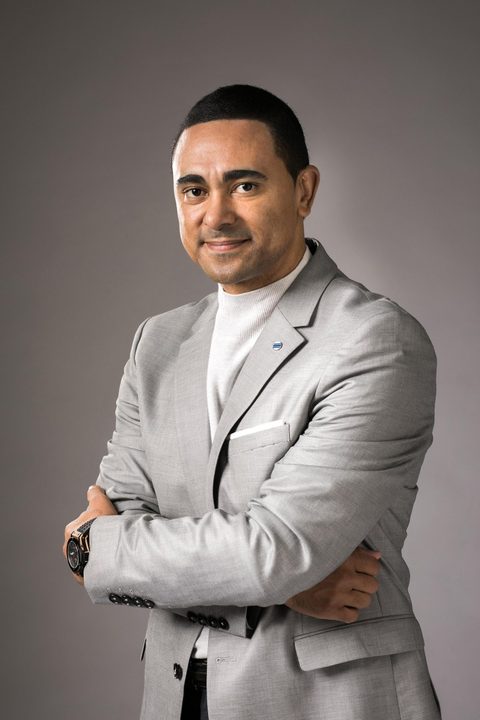
Ryan Babbage
Founder & CEO, OceanMerge® and OceanBlocks
9 min read
There is a moment in many investment processes when the mood in the room changes.
The technical presentation has gone well. The results are impressive. The founders are articulate and the market is large. Then someone on the investor's side asks a quiet question: "Can we see the assignment from the contractor who built the first version?"
Nobody answers immediately.
The founders believed they were being evaluated on the quality of their technology. The investor was evaluating something more basic: whether the company actually owns what it is asking them to fund.
Across 21 years in M&A, and as an investor in early-stage technology companies, I have sat on both sides of that table. I have seen good intellectual property fail to attract the capital it deserved. Rarely was the technology the problem. The problem was that the IP had not been placed. It had not been organised, evidenced and framed in a way an investor could underwrite.
An investor's question is simple. If I commit capital, what exactly am I buying, how secure is it and how will it make money?
The Asset That Does Not Appear on the Balance Sheet
The stakes are larger than many founders appreciate. WIPO and Brand Finance estimate that the value of corporate intangible assets worldwide crossed US$97 trillion in 2025, up 23 per cent on 2024, and that over the past decade it has averaged around two-thirds of global GDP (Brown et al. 2026). Their methodology notes that accounting standards keep roughly 79 to 83 per cent of that value off corporate balance sheets.
That is the paradox at the centre of IP investment. The asset that drives most of the value is the one least visible in the accounts. An investor therefore cannot rely on the balance sheet. They must reconstruct the asset from contracts, registrations, records and evidence.
The founder who has already done that reconstruction begins the negotiation with an advantage.
Three Ways to Put a Price on an Idea
WIPO describes three principal methods for valuing IP (WIPO n.d.c).
The income method is the most commonly used. It values the asset on the economic income it is expected to generate, adjusted to present value. It works best when cash flows can be estimated with some reliability and a proxy for risk is available.
The market method compares the asset with prices actually paid for similar rights in comparable circumstances. It depends on reliable comparable transactions, which are scarce for genuinely novel technology.
The cost method asks what it would cost to recreate a similar asset. It is useful when economic benefits cannot yet be quantified, but WIPO cautions that it does not account for wasted costs or for what is unique about the asset.
Early-stage founders often lean on the cost method because it is the only number they are sure of: "We spent six years and several million dollars." Investors rarely find that persuasive. Money spent is not value created. The discipline is to build towards an income-based case, supported by evidence, while accepting that the investor will discount it for risk.
WIPO draws a distinction worth remembering. Price is what a buyer is willing to pay in an arm's-length transaction. Value is what a tested method produces (WIPO n.d.c). Founders negotiate price. They earn it by demonstrating value.
WIPO also sets out the prerequisites for valuing IP at all. The asset must be separately identifiable and evidenced, capable of being legally enforced and transferred, and have an income stream that can be isolated from other assets (WIPO n.d.c). Much of the work that follows is about meeting those conditions.
The Title Deed Comes First
Nobody buys a house without checking the title. Investors apply the same discipline to IP.
Ownership is where many deals stall. IP is frequently created by founders before the company existed, by early contractors, by research collaborators or by staff whose agreements were never updated. IP Australia's guidance is a useful starting point: an employer generally owns IP created by employees in the course of their employment, but a contractor generally owns what they create unless the contract says otherwise (IP Australia n.d.c).
The courts have shown how costly the gaps can be. In University of Western Australia v Gray, the Full Federal Court held that the university did not own inventions made by one of its professors. It found no implied duty to invent in his employment, and no effective arrangement giving the university ownership (University of Western Australia v Gray 2009). In the United States, the Stanford v Roche litigation turned partly on wording. A researcher had signed one agreement in which he agreed to assign future rights to Stanford, and a later one, while visiting a company, in which he did "hereby assign" them. The courts gave effect to the present assignment, and the Supreme Court confirmed that federal funding legislation did not automatically vest title in the university (Board of Trustees of Leland Stanford Junior University v Roche Molecular Systems, Inc. 2011).
Two cases. Two jurisdictions. One lesson.
Ownership is a matter of documents, not assumptions.
Every link in the chain should be recorded: who created the asset, when, under what agreement and how it was transferred to the company. A missing assignment discovered in diligence costs far more, in time, valuation and goodwill, than one quietly resolved six months earlier. WIPO's due diligence guidance makes the same point: map each ownership link and close the gaps before an investor finds them (WIPO n.d.a).
A Fence Is Not a Moat
Registered rights matter, but a fence marks a boundary; it does not stop a determined competitor. Investors want to know how hard it would be for a well-funded rival to replicate the business, and how long it would take.
Patents and trade secrets illustrate the trade-off. An Australian standard patent can last up to 20 years, or 25 years for pharmaceutical substances, provided renewal fees are paid. It gives the owner the right to stop others making, using or selling the invention in Australia (IP Australia n.d.b). But protection is territorial. There is no worldwide patent, so an Australian company entering the Gulf or Asia must seek protection in each market that matters. A provisional application establishes a filing date but does not itself confer rights; the applicant then has 12 months to file a standard application (IP Australia n.d.b). And a patent is, by design, a public disclosure.
Trade secrets work differently. They are not registered with any IP office. They are protected through secrecy, confidentiality agreements and the common law (IP Australia n.d.a). They can last indefinitely, but only for as long as the secret is kept.
Neither is superior. The right choice depends on whether the advantage can be reverse-engineered, how quickly the field moves and where the company will compete. The strongest positions layer several sources of defensibility: formal protection where it is enforceable, know-how held under disciplined confidentiality, data and integration that deepen with every customer, and relationships in markets where trusted partners decide who is deployed.
Be honest about which layers you have, and which you are still building.
The Right to Exclude Is Not the Right to Operate
There is a second question that founders frequently overlook. Owning IP gives you the right to exclude others. It does not give you the right to operate.
Freedom to operate, as WIPO describes it, means being free to use your product or service as planned without incurring liability for the unauthorised use of IP owned by a third party (WIPO 2024). A company can hold strong rights over its own improvement and still be blocked by an earlier patent covering an underlying component. WIPO recommends a preliminary search early, updated at each stage of development, and a formal opinion from a qualified IP professional for each country of interest before committing to a design (WIPO 2024).
Investors ask about this because it is where unexpected liabilities live. A founder who can show a reasoned freedom-to-operate view for the first target markets, and a plan to license or design around any blocking rights, removes a risk that would otherwise be priced into the deal.
Licence or Assignment: Renting the House or Selling It
The commercial pathway for IP usually runs through one of two instruments.
An assignment transfers ownership. A licence grants permission to use, while ownership stays where it is. The Australian Government's research commercialisation guide notes that assignment suits a decision to sell IP outright, while a licence is more appropriate when the owner needs to retain certain rights. It also observes that where a fair price must be agreed, an assignment can take six months or longer to negotiate (Department of Education 2022).
For investors, the choice shapes what they are buying. A licensing model can keep the asset inside the company and generate recurring revenue across territories. An assignment converts the asset into cash once, and removes it. Exclusive licences need careful scoping by field, territory and term. Granting exclusive Gulf-wide rights to the first enthusiastic partner, before performance is proven, is one of the most expensive mistakes I see.
Cross-border structures add another layer. If IP will sit in a holding company in an Abu Dhabi or Dubai free zone, the transfer from an Australian entity must be properly documented, valued and advised on from tax and legal perspectives. The same government guide recommends specialist advice where foreign-registered IP or goodwill is being assigned (Department of Education 2022). Moving IP is not an administrative step.
It is a transaction in its own right.
Evidence Travels Further Than Adjectives
Investors fund consequences, not potential.
The most persuasive thing a founder can show is evidence that the IP works outside controlled conditions and that someone values it. A pilot with a credible partner. A paid trial. A letter of intent from an industrial user. Operational data. A repeat order. Each removes a piece of uncertainty, and each strengthens the income-based case on which valuation ultimately rests.
Alongside evidence, investors need a pathway they can follow. Who pays, how much and why now? Which market comes first, and why that one? A technology that struggles for attention in one economy can address a national priority in another.
Then there is the team. The same asset in different hands can produce very different outcomes. Investors look at whether the people who understand the IP most deeply will stay, whether their incentives are aligned and whether the founders describe what is not yet proven as readily as what is. In the Gulf, where much capital is relationship-led and long-term, character carries particular weight.
Technical brilliance opens the door. Trust keeps it open.
The Data Room Is the First Meeting
Diligence is where good intentions meet documents. WIPO's advice is direct: audit your own IP before an investor does (WIPO n.d.a; WIPO n.d.b). A practical readiness list:
- An IP register listing each asset, its owner, its status, filing dates and the territories covered.
- Signed agreements for every founder, employee, contractor and collaborator who contributed, with present-tense assignment wording.
- Confirmatory assignments for anything created before incorporation.
- Licences in and out, including open-source components and any restrictions they carry.
- Confidentiality practice: how know-how is protected, who has access and how that is recorded.
- A freedom-to-operate view for the first target markets, with professional advice where the risk is material.
- A valuation rationale identifying the method used and the evidence behind each assumption.
- A clean corporate record: cap table, constitution, board minutes and any grant or research-funding terms that affect ownership.
- Evidence of traction, organised and verifiable.
None of this is glamorous. All of it tells an investor that the founders respect their time and capital. Long before the first meeting, the data room has already introduced you.
Investors are not looking for perfection. They are looking for clarity, honesty and a credible path from IP to revenue.
An idea may win their attention.
A clean title wins their capital.
If you are a founder preparing IP for investment, or an investor or corporate partner assessing an opportunity across Australia and the GCC, I would welcome a conversation. Start a conversation through this site, and subscribe to The OceanMerge GCC Opportunity (opens in a new tab) on LinkedIn for my regular notes on capital, IP and cross-border strategy.
References
- Board of Trustees of Leland Stanford Junior University v Roche Molecular Systems, Inc. (2011) 563 U.S. 776. Supreme Court of the United States. Available at: https://supreme.justia.com/cases/federal/us/563/776/ (Accessed: 30 October 2026).
- Brown, A., Garnham, A., Grewal, A.K., Bonaglia, D., Rivera León, L. and Wunsch-Vincent, S. (2026) The Value of Corporate Intangible Assets Worldwide Approaches USD 100 Trillion in 2025. GII Innovation Insight. World Intellectual Property Organization. Available at: https://www.wipo.int/en/web/global-innovation-index/w/blogs/2026/the-value-of-corporate-intangible-assets-worldwide (Accessed: 30 October 2026).
- Department of Education (2022) 5.11 – Assignment Agreement. Higher Education Research Commercialisation IP Framework: Practical Guide. Australian Government. Available at: https://www.education.gov.au/hercip/higher-education-research-commercialisation-intellectual-property-framework-practical-guide/5-individual-template-guides/5-11-assignment-agreement (Accessed: 30 October 2026).
- IP Australia (n.d.a) Types of IP. IP Australia. Available at: https://www.ipaustralia.gov.au/understanding-ip/types-of-ip (Accessed: 30 October 2026).
- IP Australia (n.d.b) What Are Patents? IP Australia. Available at: https://www.ipaustralia.gov.au/patents/understanding-patents (Accessed: 30 October 2026).
- IP Australia (n.d.c) Who Owns Intellectual Property? IP Australia. Available at: https://www.ipaustralia.gov.au/understanding-ip/who-owns-ip (Accessed: 30 October 2026).
- University of Western Australia v Gray [2009] FCAFC 116. Federal Court of Australia (Full Court). Available at: https://www4.austlii.edu.au/au/cases/cth/FCAFC/2009/116.html (Accessed: 30 October 2026).
- WIPO (2024) Toolkit: Using Inventions in the Public Domain – Tool 5: Freedom to Operate. World Intellectual Property Organization. Available at: https://www.wipo.int/documents/d/tisc/docs-en-tisc-toolkit-freedom-to-operate-description.pdf (Accessed: 30 October 2026).
- WIPO (n.d.a) How to Prepare for IP Due Diligence – The Ultimate Guide for Ventures. World Intellectual Property Organization. Available at: https://www.wipo.int/en/web/ip-commercialization/w/blog/how-to-prepare-for-ip-due-diligence-the-ultimate-guide-for-ventures (Accessed: 30 October 2026).
- WIPO (n.d.b) Uncovering IP Risks and Potential: IP Audit. World Intellectual Property Organization. Available at: https://www.wipo.int/en/web/business/ip-audit (Accessed: 30 October 2026).
- WIPO (n.d.c) Valuing Intellectual Property Assets. World Intellectual Property Organization. Available at: https://www.wipo.int/en/web/business/ip-valuation (Accessed: 30 October 2026).
Trust and transparency
Full trust and credentials page →Where the ventures are
- OceanMerge® – IFZA, Dubai Digital Park, Dubai Silicon Oasis, Dubai
- OceanBlocks – Abu Dhabi Global Market (ADGM)
- Stacked Up – We Are Stacked Up Pty Ltd, Australia
Credentials
- RMIT MBA (International Business), with Distinction
- RMIT Master of Blockchain Enabled Business, with Distinction
- HBS Online, Sustainable Business Strategy (2022)
- Director, EIBC Ltd, 2018–2021
Your data
- No advertising or tracking cookies
- Enquiries are read by Ryan Babbage
- Based in the UAE