

Capital & Investment
The Gulf's Clean Energy Story Has Left the Rehearsal Room
Where the real opportunities in GCC clean energy lie in 2027
For years, the Gulf's clean energy story was performed in rehearsal: strategies, targets and announcements. In 2027 the audience will want the performance. The opportunities belong to those who understand policy, infrastructure, certification and trust.
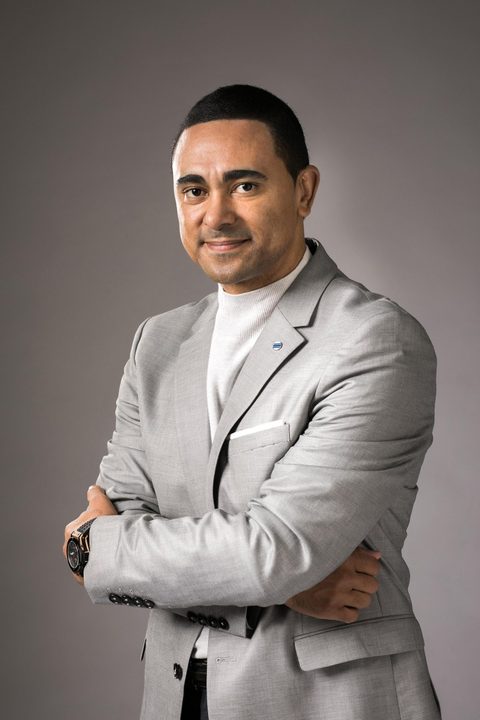
Ryan Babbage
Founder & CEO, OceanMerge® and OceanBlocks
9 min read
If the Gulf's energy transition were a stage production, the past few years would have been the rehearsals.
The scripts were written as national strategies. The cast was announced in memoranda and ministerial visits. The set was sketched on maps of hubs, corridors and industrial zones. Some critics in the audience doubted that oil and gas economies would ever take the stage. Others were dazzled by the scale of the posters outside the theatre.
Both reactions miss what is happening now.
The rehearsals are ending. The audience has taken its seats. And audiences judge performances, not posters.
Working across the GCC and with Australia, and through OceanBlocks, my clean energy company based in Abu Dhabi with projects planned in Oman, I spend much of my time on one question: where will value actually be created as these strategies move into execution? What follows is a market-level view of where I believe the real opportunities lie as we move into 2027.
Four Countries, Four Scripts
The first mistake is to speak of "the GCC" as one opportunity. Each country is performing its own script.
The UAE has committed to net zero by 2050. Its National Hydrogen Strategy targets 1.4 million tonnes a year of low-carbon hydrogen production by 2031, comprising 1 million tonnes of green and 0.4 million tonnes of blue hydrogen, rising to 7.5 million tonnes by 2040 and 15 million tonnes by 2050. It forecasts domestic demand of 2.7 million tonnes a year by 2031 and envisages hydrogen "oases" where production and use cluster together (UAE Government n.d.). A senior official at the Ministry of Energy and Infrastructure has said the country aims to reach 14.2 GW of renewable capacity by 2030 (WAM 2025a).
Saudi Arabia has set a net zero target for 2060 under the Saudi Green Initiative (SGI 2021) and has committed to generating 50 per cent of its electricity from renewable sources by 2030 (SGI n.d.). In an economy of that size, even incremental policy shifts create very large markets.
Oman has a national strategy for an orderly transition to net zero by 2050 (Sultanate of Oman n.d.) and has been one of the most structured movers on hydrogen. It created Hydrogen Oman (Hydrom) in 2022 to allocate land and run auctions. The International Energy Agency notes that Oman aims to produce at least 1 million tonnes of renewable hydrogen a year by 2030, up to 3.75 million tonnes by 2040 and up to 8.5 million tonnes by 2050 (IEA 2023). Hydrom's own 2024 strategy reports eight project agreements representing 1.38 million tonnes a year of hydrogen production and 34.8 GW of associated renewable capacity (Hydrom 2024).
Qatar approaches the transition as one of the world's leading LNG suppliers. Its National Climate Change Action Plan targets a 25 per cent reduction in greenhouse gas emissions by 2030 against a business-as-usual baseline (MECC 2021). QatarEnergy is building a blue ammonia facility at Mesaieed designed for 1.2 million tonnes a year, with an integrated carbon capture and storage capacity of 1.5 million tonnes a year (QatarEnergy 2024).
Same region. Different resources, institutions, timelines and appetites. The IEA observes that where natural gas is cheap, as in the Middle East, the cost gap for renewable hydrogen remains larger and carbon capture is likely to be more competitive in the near term (IEA 2025a). That helps explain why blue and green pathways sit side by side in Gulf strategies.
Strategy should begin with the country, not the map.
The Market Is Smaller Than the Posters
It is worth being precise about the global market these strategies serve.
Global hydrogen demand reached almost 100 million tonnes in 2024. Low-emissions hydrogen production grew by 10 per cent that year and was on track to reach 1 million tonnes in 2025, still less than 1 per cent of global production (IEA 2025a). For the first time, the potential production from announced low-emissions projects to 2030 fell, from 49 million tonnes a year to 37 million, as projects were delayed or cancelled. Yet projects that are operating or have reached a final investment decision are set to deliver 4.2 million tonnes a year by 2030, a fivefold increase on 2024 (IEA 2025a).
Both facts are true at once. The market is real, and it is growing quickly from a small base. It is also much smaller, for now, than the announcements implied.
For investors, that gap is the opportunity. The value in 2027 will sit with projects that cross from announcement to investment decision, and with the businesses that help them do so.
The Molecule Needs a Buyer
A production target is not demand. A signed memorandum is not an offtake contract.
The IEA reports that new offtake agreements signed in 2024 totalled 1.7 million tonnes a year, down from 2.4 million in 2023, with firm deals concentrated in refining, chemicals and shipping (IEA 2025a). Offtake is the scarcest input in the industry.
The Gulf's most advanced project shows why. NEOM Green Hydrogen Company, an equal joint venture of ACWA Power, Air Products and NEOM, reached financial close in May 2023 at a total investment value of US$8.4 billion, including US$6.1 billion of non-recourse financing from 23 banks and financial institutions. Alongside the financing, the company announced an exclusive 30-year agreement for Air Products to take all of the plant's green ammonia (NGHC 2023). The plant is designed to produce up to 600 tonnes of hydrogen a day using up to 4 GW of solar and wind. In August 2026, MEED reported that construction was complete and commissioning had begun, with commercial operations targeted for 2027 (MEED 2026).
The lesson is not about scale. It is about sequence. The buyer was secured when the capital was committed.
New forms of demand are emerging to fill the gap. Germany's H2Global mechanism awarded its first pilot auction for renewable ammonia to Fertiglobe, the ADNOC and OCI partnership based in Abu Dhabi. Deliveries to European ports are planned from 2027, rising to a cumulative 397,000 tonnes by 2033, with a maximum contract value of EUR 397 million. The ammonia is to be produced in Egypt (H2Global 2024). In Japan, the Hydrogen Society Promotion Act of 2024 offers 15-year contracts for difference for domestic and imported low-carbon hydrogen, provided projects continue operating for at least ten years after support ends (IEA 2025b).
Domestic demand deserves more attention than it receives. Gulf economies have substantial industrial bases in refining, fertilisers, aluminium, steel and chemicals. Decarbonising that industry can provide earlier and more predictable demand than export markets that depend on policy decisions made elsewhere.
The Stage Matters More Than the Star
Large clean energy projects live or die on infrastructure that rarely appears in a press release: transmission, water, storage, pipelines, ports and land with clear tenure.
Ports matter most of all. The IEA notes that a large share of today's hydrogen production and demand sits in refineries and chemical plants near ports, and that nearly 80 ports worldwide already have well-developed expertise in handling chemical products. It recommends a focus on industrial and port clusters that co-locate production with pools of potential users (IEA 2025a).
The Gulf is well placed for this. Oman, the IEA observes, sits on important trade routes between Europe and Asia, has existing infrastructure that can be used or repurposed for low-emissions fuels, and has extensive experience in handling and exporting both LNG and ammonia (IEA 2023). The UAE's hydrogen oases follow the same cluster logic (UAE Government n.d.).
For investors and partners, infrastructure is also where the opportunity is less crowded. Not everyone needs to own a production project. Storage, logistics, engineering, monitoring, services and the businesses that surround large projects can offer more predictable returns and help shape the ecosystem itself.
The star receives the applause. The stage determines whether there is a performance at all.
A Certificate Is Becoming Part of the Product
As clean energy becomes a traded commodity, buyers need proof. Where did the energy come from? What were the emissions? Who verified them?
Increasingly, the certificate is not paperwork attached to the product. It is part of the product.
The European Union has set the most detailed rules. Under its delegated acts on renewable fuels of non-biological origin, renewable hydrogen must achieve at least 70 per cent greenhouse gas savings and meet criteria for additionality and for temporal and geographic correlation. The rules apply to international producers exporting to the EU as well as to domestic ones, and certification relies on recognised voluntary schemes (European Commission n.d.b). Until the end of 2029, renewable electricity and hydrogen production must be matched within the same calendar month; from 1 January 2030, within the same hour (European Commission 2023; European Union 2023). The EU's Renewable Energy Directive expects such fuels to account for at least 42 per cent of hydrogen used in industry by 2030 and 60 per cent by 2035 (European Commission n.d.b).
At the border, the EU's Carbon Border Adjustment Mechanism entered its definitive regime on 1 January 2026 and covers hydrogen and fertilisers, among other goods (European Commission n.d.a). Japan's framework includes a certification threshold aligned with EU levels, at around 3.4 kilograms of carbon dioxide equivalent per kilogram of hydrogen (IEA 2025b).
Australia launched its Guarantee of Origin scheme on 3 November 2025. Administered by the Clean Energy Regulator, it is a voluntary framework that tracks emissions intensity and initially certifies hydrogen produced by electrolysis, with plans to extend to other low-carbon products (CER 2025).
Gulf systems are emerging. Oman's Net Zero Centre, established in December 2024, is to issue certifications for carbon, hydrogen and low-carbon products (Oman Ministry of Finance 2024). In January 2025, the UAE's Minister of Energy and Infrastructure said the ministry was drafting hydrogen legislation and standards in collaboration with the International Partnership for Hydrogen and Fuel Cells in the Economy (WAM 2025b).
This is where Australia and the Gulf can be genuinely complementary. Australia brings regulatory experience and certification design. The Gulf brings resources, capital and the capacity to build at scale.
Certification is, in the end, a formal expression of trust.
Capital Follows Contracts
Capital for clean energy in the GCC is not scarce. Sovereign-linked investors, national energy companies, family offices and international developers are all active.
What is scarce is well-structured opportunity: projects with clear ownership, credible partners, a defined route to offtake, recognised certification and governance that can withstand diligence.
The IEA's recommendations point in the same direction. It urges governments to maintain support for shovel-ready projects that target existing hydrogen uses, to pool demand in industrial hubs, and to use export credit agencies and public finance institutions to guarantee first-of-a-kind projects (IEA 2025a).
Think of it as a staircase. Each contract, certificate and operating milestone retires a specific risk, and each retired risk opens access to a larger and cheaper pool of capital.
Where Partnerships Fit
For investors, a few principles follow. Choose countries deliberately rather than "the region". Favour projects with demand already in view. Look beyond production to the enabling layers. Treat certification and governance as core value, not compliance overhead.
For founders and technology owners, particularly those coming from Australia, the Gulf rewards preparation and patience. Free zones such as ADGM provide familiar legal foundations. Local partners provide access and context. Relationships, built over time, decide who is invited into the most important conversations.
The curtain is rising on the Gulf's clean energy transition.
The opportunities in 2027 will not go to the loudest announcement. They will go to those who match the right asset to the right market, partner well and earn the trust that turns a strategy into a performance.
If you are an investor, family office, corporate partner or founder exploring clean energy across the GCC and Australia, I would welcome a conversation. Start a conversation through this site, and subscribe to The OceanMerge GCC Opportunity (opens in a new tab) on LinkedIn for my regular notes on energy, capital and cross-border strategy in the region.
References
- CER (2025) Guarantee of Origin Scheme Launches. Clean Energy Regulator. Available at: https://cer.gov.au/news-and-media/news/2025/november/guarantee-origin-scheme-launches (Accessed: 30 October 2026).
- European Commission (2023) Questions and Answers on the EU Delegated Acts on Renewable Hydrogen. European Commission. Available at: https://ec.europa.eu/commission/presscorner/detail/en/qanda_23_595 (Accessed: 30 October 2026).
- European Commission (n.d.a) CBAM Definitive Regime. Taxation and Customs Union. Available at: https://taxation-customs.ec.europa.eu/carbon-border-adjustment-mechanism/cbam-definitive-regime_en (Accessed: 30 October 2026).
- European Commission (n.d.b) Renewable Hydrogen. Directorate-General for Energy. Available at: https://energy.ec.europa.eu/topics/eus-energy-system/hydrogen/renewable-hydrogen_en (Accessed: 30 October 2026).
- European Union (2023) Commission Delegated Regulation (EU) 2023/1184 Establishing a Union Methodology Setting Out Detailed Rules for the Production of Renewable Liquid and Gaseous Transport Fuels of Non-Biological Origin. EUR-Lex. Available at: https://eur-lex.europa.eu/eli/reg_del/2023/1184/oj/eng (Accessed: 30 October 2026).
- H2Global (2024) Results of the Pilot Auction. H2Global Foundation. Available at: https://h2-global.org/news/results-of-the-pilot-auction/ (Accessed: 30 October 2026).
- Hydrom (2024) Oman Green Hydrogen Strategy. Hydrogen Oman. Available at: https://hydrom.om/Media/Pdf/Oman-Green-Hydrogen-Strategy-2024.pdf (Accessed: 30 October 2026).
- IEA (2023) Oman's Huge Renewable Hydrogen Potential Can Bring Multiple Benefits in Its Journey to Net Zero Emissions. International Energy Agency. Available at: https://www.iea.org/news/omans-huge-renewable-hydrogen-potential-can-bring-multiple-benefits-in-its-journey-to-net-zero-emissions (Accessed: 30 October 2026).
- IEA (2025a) Global Hydrogen Review 2025: Executive Summary. International Energy Agency. Available at: https://www.iea.org/reports/global-hydrogen-review-2025/executive-summary (Accessed: 30 October 2026).
- IEA (2025b) Hydrogen Society Promotion Act (Japan). Policies Database. International Energy Agency. Available at: https://www.iea.org/policies/28652-hydrogen-society-promotion-act (Accessed: 30 October 2026).
- MECC (2021) National Climate Change Action Plan 2030. Ministry of Environment and Climate Change, State of Qatar. Available at: https://www.mhewc.org/wp-content/uploads/2025/11/NCCAP-Consolidated_digital-en_new.pdf (Accessed: 30 October 2026).
- MEED (2026) Construction Completed on $8.5bn Neom Hydrogen Project. MEED. Available at: https://www.meed.com/acwa-completes-construction-of-85bn-hydrogen-project (Accessed: 30 October 2026).
- NGHC (2023) NEOM Green Hydrogen Company Completes Financial Close. NEOM Green Hydrogen Company. Available at: https://nghc.com/news/neom-green-hydrogen-company-completes-financial-close/ (Accessed: 30 October 2026).
- Oman Ministry of Finance (2024) Oman Net Zero Centre Established. Ministry of Finance, Sultanate of Oman. Available at: https://www.fm.gov.om/en/20352/ (Accessed: 30 October 2026).
- QatarEnergy (2024) Sustainability Report 2023. QatarEnergy. Available at: https://www.qatarenergy.qa/en/MediaCenter/Publications/Sustainability%20Report%202023.pdf (Accessed: 30 October 2026).
- SGI (2021) HRH the Crown Prince and Prime Minister Announces the Kingdom of Saudi Arabia Aims to Achieve Net Zero Emissions by 2060. Saudi Green Initiative. Available at: https://www.sgi.gov.sa/knowledge-hub/hrh-the-crown-prince-and-prime-minister-announces-the-kingdom-of-saudi-arabia-s-aims-to-achieve-net-zero-emissions-by-2060/ (Accessed: 30 October 2026).
- SGI (n.d.) Reducing Carbon Emissions. Saudi Green Initiative. Available at: https://www.sgi.gov.sa/about-sgi/sgi-targets/reduce-carbon-emissions/ (Accessed: 30 October 2026).
- Sultanate of Oman (n.d.) The Sultanate of Oman's National Strategy for an Orderly Transition to Net Zero. United Nations Framework Convention on Climate Change. Available at: https://unfccc.int/sites/default/files/resource/Oman.pdf (Accessed: 30 October 2026).
- UAE Government (n.d.) National Hydrogen Strategy. The Official Portal of the UAE Government. Available at: https://u.ae/en/about-the-uae/strategies-initiatives-and-awards/strategies-plans-and-visions/environment-and-energy/national-hydrogen-strategy (Accessed: 30 October 2026).
- WAM (2025a) UAE Aims to Reach 14.2 GW of Renewable Energy Capacity by 2030. Emirates News Agency. Available at: https://www.wam.ae/en/article/bho3ux6-uae-aims-reach-142-renewable-energy-capacity-2030 (Accessed: 30 October 2026).
- WAM (2025b) Ministry of Energy and Infrastructure Drafts New Legislation to Enhance Hydrogen Sustainability. Emirates News Agency. Available at: https://www.wam.ae/en/article/bhpw68l-ministery-energy-and-infrastructure-drafts-new (Accessed: 30 October 2026).
Trust and transparency
Full trust and credentials page →Where the ventures are
- OceanMerge® – IFZA, Dubai Digital Park, Dubai Silicon Oasis, Dubai
- OceanBlocks – Abu Dhabi Global Market (ADGM)
- Stacked Up – We Are Stacked Up Pty Ltd, Australia
Credentials
- RMIT MBA (International Business), with Distinction
- RMIT Master of Blockchain Enabled Business, with Distinction
- HBS Online, Sustainable Business Strategy (2022)
- Director, EIBC Ltd, 2018–2021
Your data
- No advertising or tracking cookies
- Enquiries are read by Ryan Babbage
- Based in the UAE